
What’s the Difference Between Greek and Mediterranean Food?
If you’ve ever browsed a Mediterranean restaurant menu and spotted moussaka, gyros, or tzatziki, you may have wondered: is Greek food the same as Mediterranean food? It’s one of the most common questions diners ask, and the answer is both simple and surprisingly layered. While the two cuisines share deep roots, they are not identical. At Crete Island Restaurant, we proudly serve authentic Greek dishes inspired by the island of Crete, and we believe understanding this distinction makes every meal more meaningful.
In short, all Greek food is Mediterranean, but not all Mediterranean food is Greek.
Understanding Mediterranean Cuisine
Mediterranean cuisine is a broad culinary umbrella that covers more than 20 countries surrounding the Mediterranean Sea, spanning three continents: Europe, Asia, and Africa. From Spain in the west to Lebanon in the east, and from Italy in the north to Morocco in the south, each nation contributes its own flavours, techniques, and traditions.
The shared backbone of Mediterranean food includes:
- Extra virgin olive oil, often called the region’s liquid gold
- Fresh vegetables such as tomatoes, cucumbers, peppers, and aubergines
- Legumes like chickpeas, lentils, and beans
- Whole grains including bulgur, rice, and wheat
- Seafood, lean meats, and regional cheeses
- A variety of herbs and spices that change from country to country
Because the region is so vast, Italian pasta, Spanish paella, Moroccan tagine, and Lebanese hummus all fall under the Mediterranean banner, despite tasting nothing alike.
What Defines Greek Cuisine?
Greek cuisine is one distinctive branch within the Mediterranean family, rooted in the traditions of mainland Greece and its islands, particularly Crete, which is widely credited as the birthplace of the original Mediterranean diet. Greek food is known for its bold yet simple flavours, built around lemon, oregano, garlic, and high-quality olive oil.
Signature elements of Greek cooking include:
- Feta cheese, along with graviera and halloumi
- Herbs such as oregano, dill, mint, and thyme
- Lamb, chicken, pork, and fresh seafood
- Phyllo pastry used in both savoury and sweet dishes
- Slow-cooked specialities like moussaka, kleftiko, and stifado
At Crete Island, our chefs draw on over 25 years of experience to recreate these traditions using olive oil sourced from small Cretan farms. You can explore our full range of traditional Greek specialities on our menu.
Key Differences Between Greek and Mediterranean Food
1. Geographic Origin
Greek food comes from a single country with one unified culinary identity. Mediterranean cuisine, by contrast, draws from dozens of nations across three continents, each with its own heritage.
2. Ingredients and Flavours
Greek dishes lean heavily on feta, olives, lemon, and oregano, producing tangy, fresh, and savoury flavours. Wider Mediterranean cooking uses a far broader spice palette, including cumin, coriander, saffron, paprika, and sumac, especially in North African and Middle Eastern dishes.
3. Cooking Methods
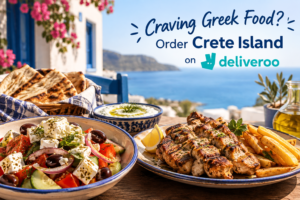
Greek cuisine favours grilling, baking, and slow roasting, techniques that highlight the natural quality of the ingredients. Souvlaki, paidakia (lamb chops), and kleftiko are perfect examples. Mediterranean cooking as a whole embraces a much wider range of methods, from Moroccan tagines and Spanish open-fire paella to Italian sautéing and Lebanese braising.
4. Signature Dishes
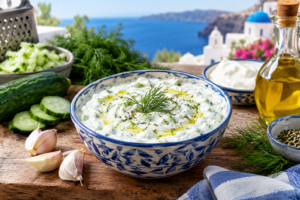
Greek menus showcase dishes like moussaka, spanakopita, souvlaki, baklava, and tzatziki. Mediterranean menus may include anything from Italian risotto and Spanish patatas bravas to Lebanese tabbouleh and Moroccan couscous. If you’d like to taste the difference for yourself, book a table at our restaurant and let our chefs guide you.
A Shared Philosophy at the Table
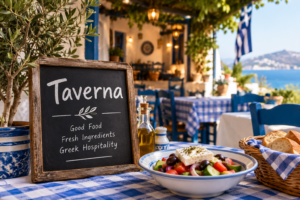
Despite their differences, Greek and Mediterranean cuisines share a powerful common thread: a love for fresh, local ingredients, simple cooking, and meals enjoyed slowly with family and friends. This taverna-style dining culture, where dishes are shared and conversation flows freely, is at the heart of everything we do. Learn more about our family-run kitchen and the heritage that inspires our cooking.
Experience Authentic Greek Cuisine in Bournemouth
So, while Greek food is undeniably Mediterranean, it stands proudly on its own with a distinct character, history, and flavour. If you’d like to taste authentic Greek cooking, the kind made with Cretan olive oil, fresh herbs, and time-honoured family recipes, visit Crete Island Restaurant in Bournemouth or get in touch with us to plan your visit.
Latest Post