
Why Is Olive Oil So Important in Cretan Cooking
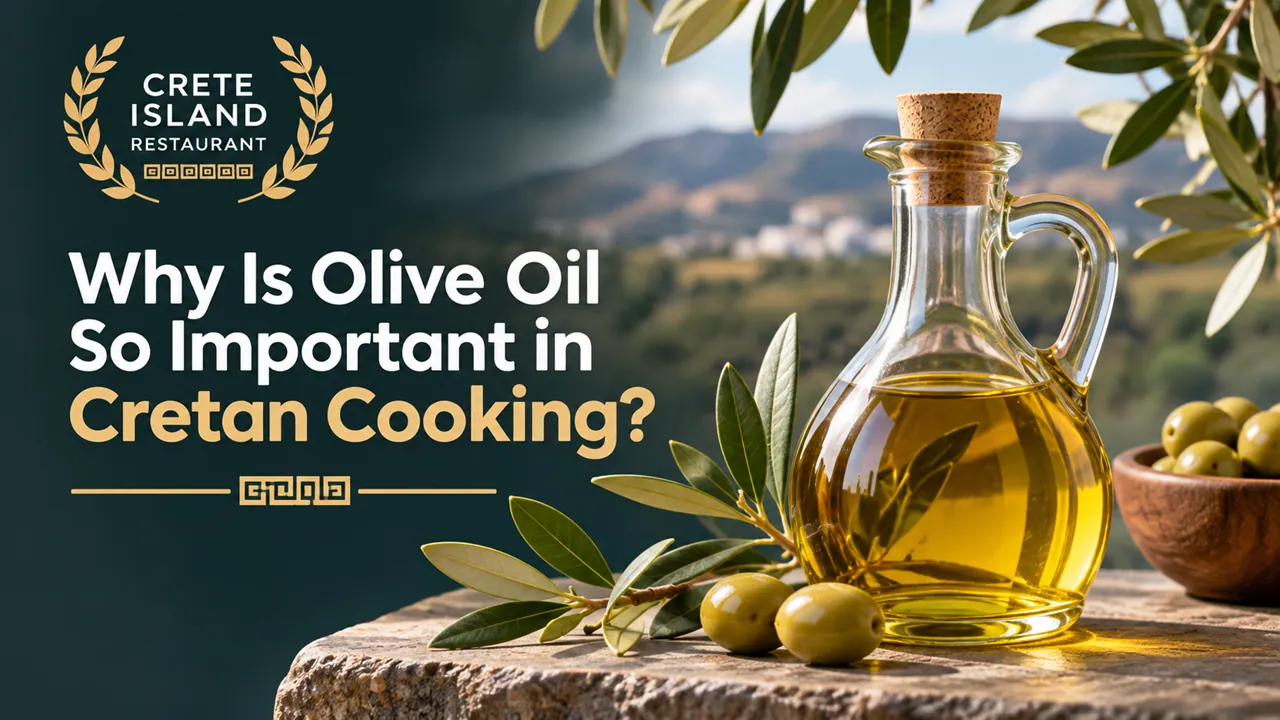
Olive oil is central to Cretan cooking because it serves as a cooking fat, a dressing and a finishing ingredient. It softens onions at the start of a stew, gives slow-cooked vegetables their richness and brings a fresh olive aroma to dishes just before serving. Extra virgin olive oil is particularly noticeable when it’s poured over warm greens or mixed with the juice from ripe tomatoes.
Why is olive oil so important in Cretan cooking? Think of the last spoonful left in a Greek salad bowl. The tomato juice, olive oil, oregano and salt have gathered into a dressing of their own. Dip a piece of bread into it and taste how the oil carries the oregano through the tomato juices.
Why Olive Oil Became a Staple in Crete
Olive growing has long been part of life on the island. Archaeological finds at Knossos connect olives and their oil with the economy of Minoan Crete. Over generations, oil pressed from local olives found its way into everyday dishes, from vegetable stews to savoury pies. Its value to a cook is just as easy to understand today. One ingredient can help build a sauce, dress a plate or bring a dish together just before it’s served.
The oil also suits a kitchen that cooks with the seasons. Ripe summer tomatoes release juice once they’re salted, and that juice mixes with the oil as the salad sits. Wild greens, served warm with lemon, give the oil a different role. Here it coats the leaves and softens the sharp edge of the lemon juice.
When to Add Olive Oil in Cretan Cooking
Decide what you want the oil to do before you pour it. In a simmered dish, it becomes part of the sauce. When added to a dish just before serving, more of the oil’s own aroma comes through. Some Cretan cooks use it at both points in the same dish.
- At the start, use it to soften onions. In fasolakia, green beans simmered with tomato and herbs, gently cook the onion in olive oil before adding the beans and tomatoes. The oil mingles with the tomato juices as the vegetables cook. This style belongs to a family of Greek dishes called ladera, which are cooked with olive oil.
- Use it as a dressing while greens are warm. Drain boiled wild greens, known as horta, then toss them with lemon juice and olive oil. Letting excess cooking water drain away first gives the dressing a fuller flavour.
- Finish with a small drizzle at the table. On traditional dakos, oil helps carry the flavour of the oregano through the tomato and cheese. Add it before serving once the tomato has had time to soften the rusk. Read more in our guide to traditional Cretan dakos.
You can try the difference at home with a spoonful of warm beans. Taste them as they are, then add a few drops of oil to another spoonful. If the second bite smells fresher or has the peppery finish you enjoy, give the rest of the dish a light drizzle. If you already like how the sauce tastes, serve it straight from the pan.
How We Use Cretan Olive Oil at Crete Island
At Crete Island, our family-run Greek restaurant in Wallisdown, Bournemouth, we use extra virgin olive oil from small Cretan farms. Our house Dako comes on a homemade dough base with fresh tomatoes, feta and oregano. The oil picks up the tomato juice and carries the oregano through the topping. It’s an example of how much a finishing ingredient can contribute to a starter made with just a few things.
A shared table gives you the chance to taste the oil in different settings. Start with the Dako, then try a forkful of Greek salad and notice how the flavour changes with cucumber, olives and feta. For a meal with friends or family, book a table at Crete Island.
Can You Cook With Extra Virgin Olive Oil?
Yes. In Cretan cooking, extra virgin olive oil works for everyday tasks such as gently frying onions, roasting vegetables and starting a tomato sauce. When softening onion, use a steady heat that lets it turn translucent and sweet. If the oil starts to smoke, take the pan off the heat and let it cool. You can normally get the result you want with gentler heat.
For a slow-cooked dish, taste the sauce before adding oil at the end. A tomato sauce that has simmered with olive oil may already have enough richness. A plate of plain warm vegetables can benefit from a few fresh drops. This is also where a fruitier oil can make its presence felt, since you’ll taste it as soon as the dish reaches the table.
What Makes Cretan Olive Oil Different?
Koroneiki and Tsounati are among the olive varieties grown on Crete. The variety, harvest and milling all affect the taste. One bottle might remind you of fresh grass and leave a peppery sensation. Another may have a softer flavour. A stronger oil can stand up to tomatoes and feta, while a milder one can suit delicate greens.
Extra virgin is the oil’s grade, and the origin on the label tells you where the oil comes from. If you see Kriti, that is a protected geographical indication for extra virgin olive oil from Crete that meets its product specification. Those details tell you what you are buying. Tasting it helps you decide which dishes to use it in.
How to Choose and Store Cretan Olive Oil
Check the Label and Taste the Oil
Look for extra virgin olive oil with a clearly stated origin. A harvest date, when listed, tells you when the olives were picked. If you’re choosing a bottle mainly for salads and finishing, put a little on plain bread before trying it with food. Then taste the same oil over a slice of tomato. You’ll get a better idea of whether you want its flavour to lead the dressing or sit quietly with the other ingredients.
Keep the Bottle Away From the Hob
A cool, dark cupboard is a better place for the bottle than the shelf beside the cooker. Close the cap after each use and keep the oil away from sunlight and heat. Dark glass and tins offer extra protection from light. If you tend to use olive oil by the spoonful for weekend lunches, a small bottle will be easier to get through than a large tin.
Taste Cretan Cooking in Bournemouth
To taste how olive oil shapes Cretan cooking, start with a few small plates to share. Our Dako has the brightness of fresh tomato and the saltiness of feta, both carried by the oil. A portion of oven-baked feta gives you a warm dish to try alongside it. Bring your appetite and share the dishes while they’re at their best.
You’ll find Crete Island at 270A Wallisdown Road, Bournemouth BH10 4HZ, open Tuesday to Sunday, noon to 10 pm. Follow Crete Island Restaurant on Facebook.
Get in Touch with Crete Island
Latest from the Crete Island Blog
Why Is Olive Oil So Important in Cretan Cooking
October 28, 2026
What’s the Traditional Greek Way to Eat and Dine
October 13, 2026
What Is Tzatziki and How Is Authentic Greek Tzatziki Made
October 5, 2026