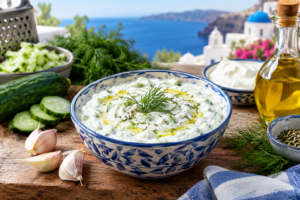
Few dishes say Greek hospitality as quickly as a cool bowl of tzatziki. At Crete Island Restaurant in Wallisdown, Bournemouth, it sits beside grilled meats, warm bread and shared plates on many tables. But what exactly is tzatziki, and what separates the real thing from the thin, watery versions sold in shops? Here is everything you need to know.
What Is Tzatziki?
Tzatziki is a thick, creamy Greek dip made from strained yogurt, grated cucumber, raw garlic and extra virgin olive oil. Many people call it a sauce, but in Greece it is closer to a dip, dense enough to stay on a spoon. The flavour is cool, tangy and boldly garlicky, with a fresh finish from the cucumber. Similar yogurt and cucumber dishes appear across the eastern Mediterranean and the Balkans, and every Greek family keeps its own small variation.
The Ingredients Behind Authentic Tzatziki
Strained Greek yogurt. This is the heart of the dip. Traditional versions use thick strained yogurt, often made from sheep or goat milk, although full fat cow milk Greek yogurt works well too. Ordinary yogurt is too loose and leads to a runny result.
Cucumber. A long, thin skinned cucumber is best because it has fewer seeds and a sweeter taste. Grate it with the skin on or partly peeled.
Fresh garlic. Greek tzatziki is proudly garlicky. Grate or press the cloves so there are no chunky bites, and adjust the amount to your taste.
Extra virgin olive oil. A fruity oil adds richness. Crete is famous for its olive oil, and our kitchen uses extra virgin oil from small Cretan farms.
Vinegar. A little red or white wine vinegar brightens the flavour. Some cooks use lemon juice instead.
Dill, Mint or Neither?
Online recipes often add dill, yet many Greek cooks say it is not part of the traditional dip. Others stir in a little dill or mint for freshness, especially in summer. Both approaches are valid. For the most traditional taste, let the garlic, yogurt and olive oil lead, and treat herbs as an optional extra.
How to Make Authentic Greek Tzatziki
You will need 500 g strained Greek yogurt, one long cucumber, two to three garlic cloves, two tablespoons of olive oil, one tablespoon of vinegar and salt to taste.
Step 1: Strain the yogurt. If it looks loose, leave it in a muslin lined sieve in the fridge for several hours or overnight.
Step 2: Drain the cucumber. Grate it coarsely, toss with a pinch of salt, rest for ten minutes, then squeeze hard in a clean cloth. Skipping this step is the main reason tzatziki turns watery.
Step 3: Mix the base. Combine the garlic, olive oil and vinegar first.
Step 4: Add the rest. Stir in the yogurt and cucumber, then season with salt and a little pepper.
Step 5: Chill. Rest it in the fridge for at least two hours, or overnight if you can. This lets the garlic mellow and the flavours blend. Taste again before serving and finish with a drizzle of olive oil.
What to Serve with Tzatziki
Tzatziki is the classic partner for grilled meat. At Crete Island, our Mixed Grill arrives with house made tzatziki, and it pairs just as well with our Paidakia lamb chops or Chicken Fillet. Enjoy it with warm Cretan Homemade Bread, alongside a fresh Greek Salad, or with golden Kolokithokeftedes, our courgette fritters. For a full mezze spread, add Melitzanosalata and Houmous. Guests who prefer meat free meals can browse our vegetarian dishes for more ideas.
Storing Leftovers
Keep tzatziki in a sealed glass container in the fridge and eat it within three to four days. Stir gently if a little liquid gathers. Do not freeze it, as the texture will break down.
Taste Authentic Tzatziki at Crete Island
Making tzatziki at home is rewarding, but nothing beats a bowl from a family run Greek kitchen. Try our Tzatziki as a starter, book a table or order online. You can also learn more about us or get in touch with any questions.