
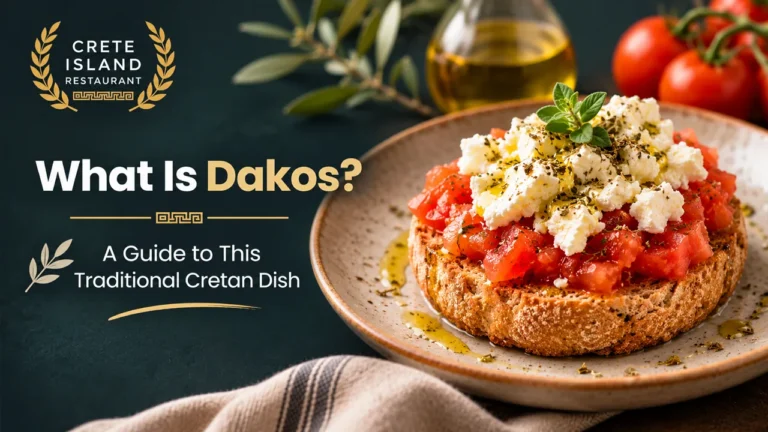
What Is Dakos? A Guide to This Traditional Cretan Dish
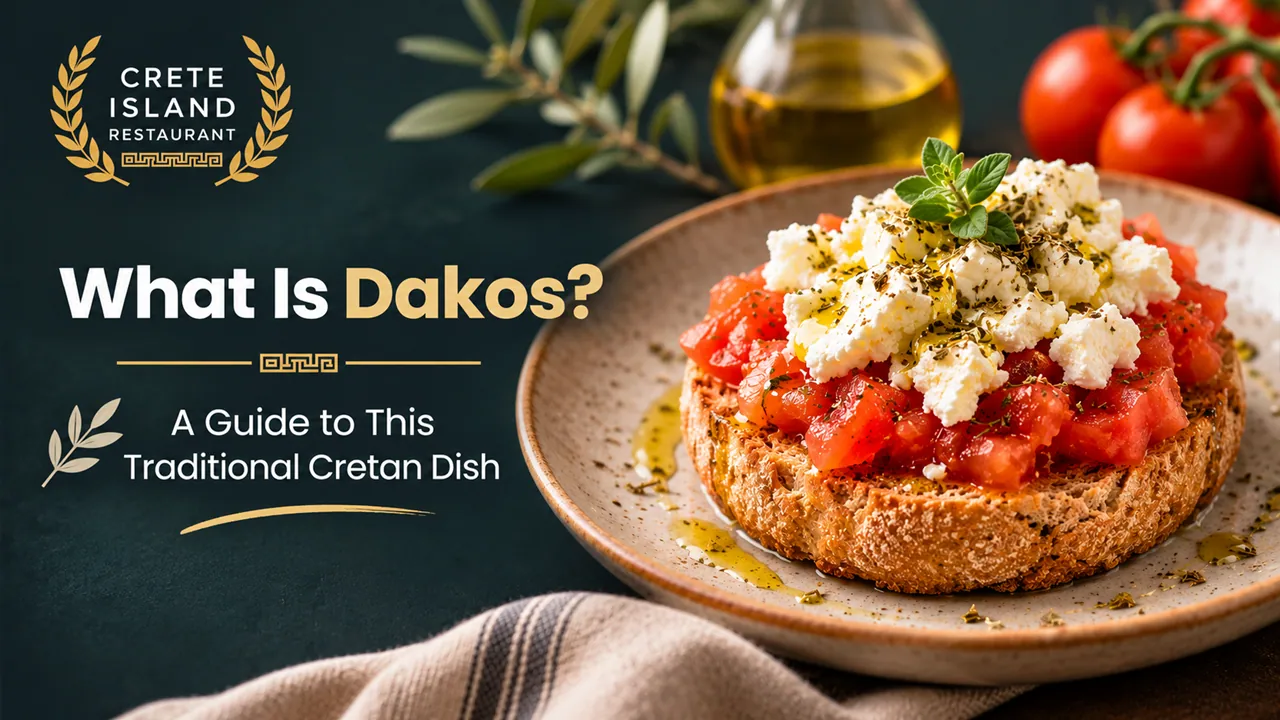
Dakos, also spelled ntakos (ντάκος), is a traditional Cretan salad or starter made with a twice-baked barley rusk topped with ripe tomatoes, crumbled cheese, oregano and extra virgin olive oil. The tomato juice softens the rusk while the edges keep a little crunch. Xinomyzithra is a traditional Cretan cheese for the dish, and feta is a common substitute.
In Crete, you may also hear dakos called koukouvagia. A single rusk makes a light lunch, and a few smaller portions work well as meze, the small dishes served for sharing at a Greek table.
What Is Dakos Made Of?
- Barley rusk. Known as paximadi in Greek, the rusk is a dry, twice-baked bread that holds the toppings. A round barley rusk makes a good base, and a large one can be broken into pieces for sharing.
- Ripe tomatoes. Grate the tomatoes so the pulp and juice reach the bread. Add a little finely chopped tomato if you prefer a chunkier topping.
- Xinomyzithra or feta. Xinomyzithra is a soft, tangy Cretan cheese. Crumbled feta gives the topping a firmer texture and a saltier flavour.
- Extra virgin olive oil and oregano. Spoon the oil over the tomato and cheese, and finish with oregano. Olives and capers add a salty bite if you’re using them.
A juicy tomato does double duty as a topping and as the liquid that softens the rusk. That’s what makes this a particularly good dish to serve when tomatoes are in season.
Traditional Dakos and Our House Dako
Traditional Cretan dakos starts with a barley rusk. At Crete Island, our family-run Greek restaurant in Wallisdown, Bournemouth, we serve our house Dako on a homemade dough base with fresh tomatoes, feta, extra virgin olive oil and oregano.
We use olive oil from small Cretan farms and serve our Dako as a starter to enjoy on its own or share with other meze. If you’d like to try it, book a table at Crete Island.
How to Make Dakos
- Grate the tomatoes. Keep the pulp and juice together, then season lightly with oregano and a pinch of salt. Taste before adding more salt if you’re using feta, olives or capers.
- Top the rusk. Set it on a plate and spoon over the grated tomato, including the juice.
- Add the cheese and olive oil. Scatter the crumbled cheese over the tomato, add olives or capers if you like, and finish with extra virgin olive oil.
- Let it rest for five to ten minutes. Serve when a fork can cut through the centre and the edges still have some bite.
How to Soften the Rusk Without Making It Soggy
Start with the tomato juice and give it a few minutes to soak in. If your rusk is especially hard, dampen it briefly with water before adding the tomato. The aim is a base that’s easy to cut and firm enough to lift with the topping still on it.
How Is Dakos Different From Greek Salad?
Dakos has a barley rusk base topped with tomato, crumbled cheese, oregano and extra virgin olive oil. As the tomato juice and oil soak into the rusk, the centre softens and the edges keep a little crunch.
Greek village salad, known as horiatiki, combines tomatoes, cucumber, onion, olives and feta on a plate. Olive oil coats the vegetables, and the fresh cucumber and onion give the salad its crunch.
How to Eat and Serve It
Serve dakos as a starter, a light lunch or part of a meze spread. If the rusk comes whole, cut it with a knife and fork so you get bread, tomato and cheese in each bite. For a shared plate, break a larger rusk into pieces before adding the toppings.
At a meze table, pair it with cool tzatziki, smoky melitzanosalata (aubergine dip) or grilled halloumi. The dips work well alongside the crisp edges of the rusk, and the halloumi adds a warm dish to the spread.
Try Our House Dako in Bournemouth
If you’re coming with friends, order our Dako with a few starters and share them around the table. You’ll find Crete Island at 270A Wallisdown Road, Bournemouth BH10 4HZ. We’re open Tuesday to Sunday, noon to 10 pm. For a feel for the restaurant before you visit, read our guest reviews on Tripadvisor.
Get in Touch with Crete Island
Latest from the Crete Island Blog

Why Is Olive Oil So Important in Cretan Cooking
October 28, 2026
What’s the Traditional Greek Way to Eat and Dine
October 13, 2026
What Is Tzatziki and How Is Authentic Greek Tzatziki Made
October 5, 2026