

What Does ‘Taverna’ Mean in a Greek Restaurant Context?
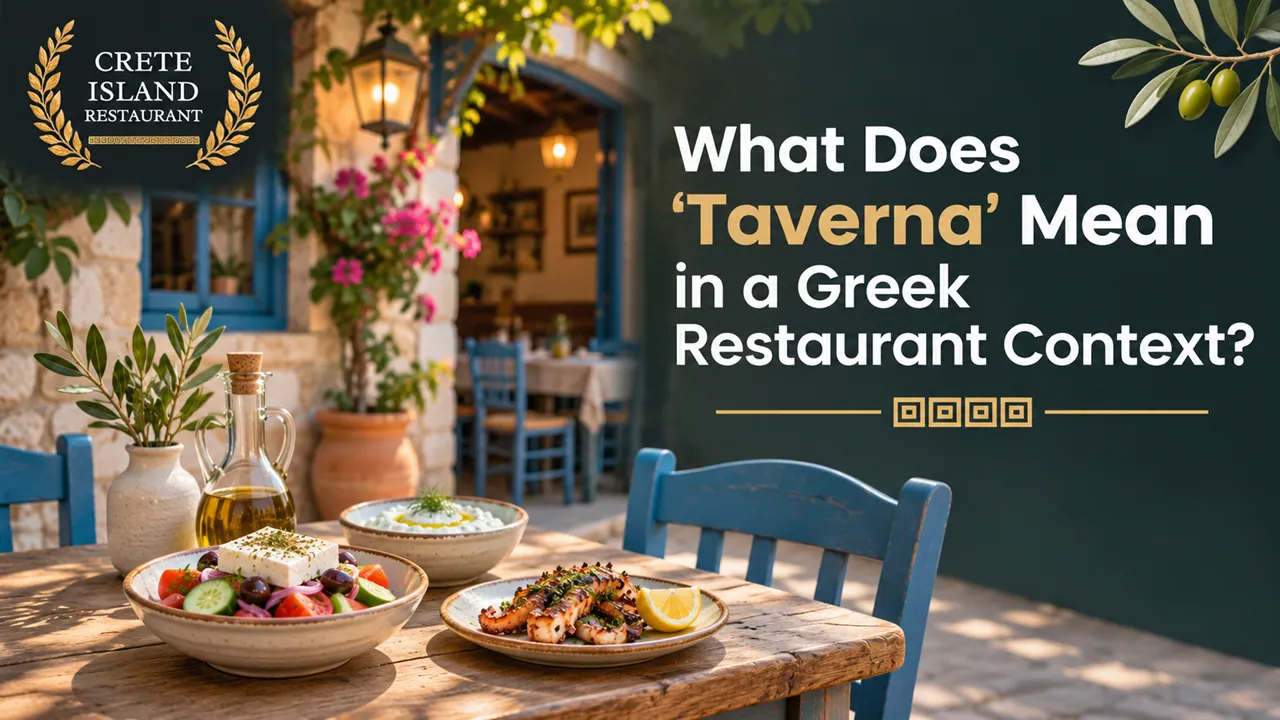
The taverna meaning in a Greek restaurant context is a small, informal place serving Greek food and drink. A taverna often offers traditional dishes, wine and plates to share. Menus and service vary, but the emphasis is usually on a comfortable meal with good company.
Think of a table with bread, a bowl of aubergine dip and a hot plate of fried cheese within reach. One person might follow with a slow-cooked dish while another keeps trying the starters. That flexibility is part of the appeal. Knowing what the name suggests helps you choose a place and order a meal that suits you.
Read the Name Before You Read the Menu
In Greek, the word is written ταβέρνα, roughly pronounced tah-VER-nah, with the stress on the middle syllable. You may see tavernes for the Greek plural, ταβέρνες, while English commonly uses tavernas. If a sign looks like ‘TABEPNA’, you’re probably recognising the shapes of the capital Greek letters ΤΑΒΕΡΝΑ.
The word traces back through Greek to Latin taberna, used for a shop or an inn. That history helps explain the taverna meaning in English, where the word is associated with a Greek eating place. The menu then tells you whether that particular kitchen leans towards fish, grills, oven dishes or small plates.
Taverna Meaning and the Word Restaurant
A taverna is a type of restaurant. Restaurant is the broad category, and taverna gives a more specific clue about the food and atmosphere. A place called an estiatorio, the Greek word for restaurant, may be simple or more formal. The names overlap, so look at the actual menu and setting when deciding where to eat.
A Few Greek Restaurant Names Worth Knowing
Greek restaurant names often point towards what a kitchen or dining room does particularly well. A psarotaverna focuses on fish and seafood. An ouzeri brings ouzo and meze together, while a mezedopoleio gives small plates a central role. These words can help you spot the kind of meal you’re looking for.
Across those variations, the taverna meaning keeps its connection with an informal Greek meal. The food may change substantially between a coastal fish kitchen and a neighbourhood place serving grilled meat. Here’s a short guide to the names you might encounter.
- Estiatorio means restaurant. Check its menu for the style of cooking and service.
- Psarotaverna means fish taverna. Seafood is the main clue in the name.
- Mageireio or magirio specialises in prepared, home-style cooked dishes, often including the day’s pots and oven trays.
- Mezedopoleio focuses on meze, the small dishes often ordered together for the table.
- Ouzeri centres on ouzo and meze. A tsipouradiko centres on tsipouro and small plates.
Look for the Kitchen’s Style on the Plate
A bowl of horiatiki, Greek village salad, might arrive with tomatoes, cucumber, olives and feta. Alongside it you could order tzatziki, the cucumber and yoghurt dip, or melitzanosalata, made with aubergine. Warm bread lets you try both and catch the tomato juices and olive oil left in the salad bowl.
The taverna meaning becomes easier to picture through those combinations. At Crete Island, our Greek menu includes pan-seared saganaki cheese, courgette fritters, oven-baked feta and more substantial plates such as moussaka and kleftiko. A few smaller dishes can begin the meal or make up most of it, depending on your appetite.
Shared Starters and Individual Mains Can Work Together
Sharing gives everyone a taste of the dishes they’re curious about. You could pass around dips and salad, then order a separate main each. Or choose several meze to share throughout. Our guide to Greek dining customs explains the ordering side in more detail, including ideas for putting a meal together.
What the Name Tells You About the Atmosphere
Many tavernas are places where people meet for familiar food and a conversation that carries on between dishes. A family lunch may take its time, while a couple on a weekday might want a shorter meal. Friendly service and a comfortable setting give the taverna meaning its social side.
Some dining rooms have music, and others are quieter. A seaside terrace, a courtyard and an indoor neighbourhood restaurant can each offer that atmosphere. Look at recent photos and ask about the evening you plan to visit if music, seating or the pace of service matters to you.
Use the Menu and Booking Details to Plan Your Visit
Prices, portion sizes and table arrangements depend on the venue. When booking, say how many people are coming and ask about the time available if you hope to make an evening of it. For Crete Island, you can browse guest reviews and restaurant photos on TheFork before choosing your table.
Three Questions That Help You Order
Once you’ve chosen a place, the team can help you match the menu to your appetite. Ask which dish they recommend, how much a shared plate serves and whether your starters and mains can arrive in the order you prefer. Those details make the meal easier to plan.
For a group, agree on a couple of shared choices first. Ask about ingredients before adding dishes for anyone with a dietary requirement. A bowl of dip, some bread and one warm plate give people something to try while the rest of the order is being decided.
- What do you recommend from the kitchen today? This helps you find the dish the team is keen for you to try.
- Would these dishes be enough for our table? Use the answer to judge portions before adding more.
- Could we have the starters first? Mention the pace you prefer when placing the order.
Ask About Vegetable Dishes as Well as the Grill
Greek taverna menus can offer plenty to explore beyond meat and fish. Dips, salads, cooked vegetables and stuffed vine leaves may form part of the choice. At Crete Island, melitzanosalata, Greek salad and courgette fritters are among the options you can put together for a lighter meal.
Tell the team whether you’re choosing dishes because you enjoy vegetables or have a particular dietary need. A cheese topping, yoghurt dressing or the ingredients in a filling can affect the choice. Ask which plates would work well together, then add bread or a side if you want something more substantial.
A Bournemouth Table With Cretan Roots
At Crete Island, the taverna meaning takes shape through our family’s Greek and Cretan cooking. After running a restaurant in Greece, our family moved to the area and created a dining room in Wallisdown. Eleni and Pandi bring more than 25 years of experience to the kitchen, and we use extra virgin olive oil from small Cretan farms.
For a first taste, try the melitzanosalata with Cretan homemade bread, then pass around a portion of saganaki while the cheese is hot. The smoky aubergine and the golden crust on the cheese give you two quite different bites from a small order. You’ll find us at 270A Wallisdown Road, Bournemouth BH10 4HZ.
Get in Touch with Crete Island
Latest from the Crete Island Blog

Why Is Olive Oil So Important in Cretan Cooking
October 28, 2026
What’s the Traditional Greek Way to Eat and Dine
October 13, 2026
What Is Tzatziki and How Is Authentic Greek Tzatziki Made
October 5, 2026