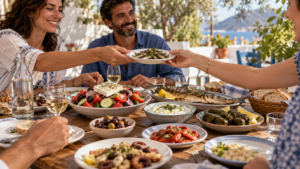
Picture a table crowded with small bowls: creamy dips glowing with olive oil, warm bread torn straight from the basket, golden cheese still sizzling, plump olives glistening, and a chilled glass of ouzo waiting nearby. That is meze, the beating heart of Greek dining and one of the most joyful ways to eat anywhere in the world.
If you have ever wondered what Greek meze plates really are, whether they are the same as tapas, or if they genuinely deserve their reputation, this guide walks you through everything you need to know before your next visit.
What Are Greek Meze Plates?
The word meze (plural mezedes) comes from a Persian root meaning “taste” or “flavour”, and that captures the idea perfectly. Meze are small shared plates designed to be enjoyed slowly, often alongside a drink and always in good company. They can appear as appetisers before a main course, but in Greece they are just as often the meal itself, with new plates arriving one after another until the table is full.
Unlike a rushed starter, meze is a whole way of eating: unhurried, generous, and deeply social. Every region has its own favourites, from the barley rusks of Crete to the seafood specialities of the Aegean islands.
What Is on a Traditional Meze Table?
A classic meze spread balances textures, temperatures, and flavours. You will usually find:
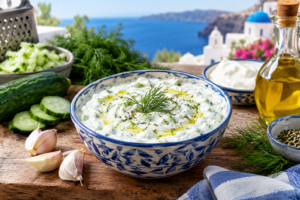
- Dips and spreads: creamy tzatziki made with strained yoghurt and cucumber, and smoky melitzanosalata blended from fire roasted aubergines.
- Warm cheese: saganaki tiri, pan seared until golden and served straight from the pan.
- From the sea: Saganaki garides with prawns simmered in tomato sauce, or saganaki midies with mussels in white wine.
- Vegetables and herbs: Golden kolokithokeftedes courgette fritters, premium olives, and the iconic Cretan dako topped with tomato, feta, and oregano.
- Bread for sharing: traditional skordopsomo garlic bread, perfect for scooping every last spoonful of dip.
The Culture Behind Meze
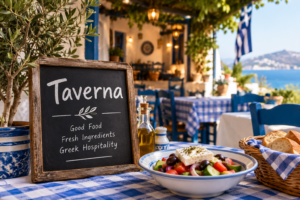
Meze is not really about the food alone; it is about parea, the Greek word for good company. In tavernas across Greece, families and friends gather for hours, refilling glasses of wine, ouzo, or raki, and letting the table evolve as new dishes arrive. Nobody rushes to finish, and nobody eats in silence.
This is where meze differs from Spanish tapas or Italian antipasti. The pace is slower, the atmosphere warmer, and the food is more deeply tied to hospitality. As the Greek saying goes, when you eat alone you eat half, but when you share, you eat double.
Are Greek Meze Plates Worth It?
In a word, yes. Here is why so many diners find them the best way to experience Greek food:
- Variety in every bite. Instead of committing to a single main course, you get to sample six or seven different flavours, from tangy and smoky to buttery and fresh.
- Perfect for groups. Meze is built around sharing, which makes it ideal for date nights, birthdays, family meals, or a relaxed catch up with friends.
- A cultural experience. Ordering meze is closer to a mini food tour of Greece than to a standard round of starters.
- Naturally healthy. Anchored by olive oil, fresh vegetables, yoghurt, herbs, legumes, and grilled proteins, meze reflects the Mediterranean diet at its very best.
- Great for every diet. Many meze dishes are naturally suitable for a range of preferences. You can browse our vegetarian, vegan, and gluten free selections online.
The only real “downside” is that once you have enjoyed a proper meze spread, ordering just one plate on your own can feel a little lonely.
Experience Authentic Greek Meze in Bournemouth
At Crete Island Restaurant, our family run kitchen brings the true flavours of Crete to Wallisdown, using extra virgin olive oil from small Cretan farms and time honoured family recipes. Whether you are new to Greek food or a lifelong fan, our meze selection is the best way to taste what Greek dining is really about.