Few dishes capture the spirit of Greece quite like the gyros. Walk through any neighbourhood in Athens or any village in Crete and you’ll find the same scene, a slow-turning spit of seasoned meat, warm pita beside it, and the smell of garlic and oregano in the air. But what is a traditional Greek gyros, really, and what separates the authentic version from the imitations? Here’s what to know before your next bite.
The Origins: From Bursa to Athens
The word gyros (pronounced “yee-roh“) comes from the Greek for “turn”, a nod to the vertical rotisserie at the dish’s heart. The cooking technique is widely traced to 19th-century Bursa, where the vertical-spit method now associated with döner kebab was perfected.
Gyros arrived in Greece in the 1920s, brought home by refugees from Asia Minor after 1922. The recipe quickly took on a distinctly Greek identity, lamb and beef gave way to pork, and a cool, garlicky yoghurt sauce became the signature finish. By the late 20th century, gyros had spread across Athens, Thessaloniki, and the islands, becoming the country’s most-loved street food.
The Anatomy of an Authentic Greek Gyros
A real Greek gyros is built from four essential elements:
- The meat. Traditionally pork, with chicken a close second. Lamb and beef versions exist but are less common in Greece. The meat is layered onto a vertical spit, seasoned with oregano, garlic, paprika, and thyme, and slow-roasted as it turns, the outer edge caramelises into crisp shavings while the inside stays juicy.
- The pita. Not the thin pocket variety, but a thick, soft, round pita lightly brushed with oil and warmed on a flat grill until golden and pliable.
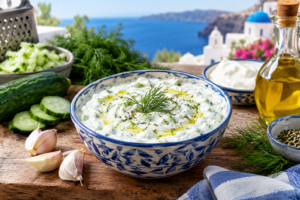
- The tzatziki. Cool, creamy, and tangy, made from strained Greek yoghurt, grated cucumber, garlic, olive oil, and herbs. Our tzatziki at Crete Island is made the traditional way.
- The fries (inside the wrap). The detail that surprises most first-timers: a handful of crisp chips is tucked inside the pita, alongside fresh tomato and chopped onion. That’s the authentic Greek way and it turns the gyros into a complete, handheld meal.
Roll it tightly in paper, and you have gýros-pitá, Greek street food at its finest.
Gyros vs Souvlaki: Know the Difference
The two dishes are often confused, but they aren’t the same. Gyros uses meat shaved from a vertical rotating spit. Souvlaki uses small chunks of marinated meat skewered and grilled horizontally over coals. Both are usually served with pita and tzatziki, but the cooking method and the texture of the meat sets them apart.
Regional Touches: From Athens to Crete
Gyros looks broadly similar across Greece, but regional details shift with the landscape. Athens favours generously stuffed pork wraps with bright tomato and a heavy hand of tzatziki. Thessaloniki leans bolder and more heavily spiced. On Crete, the herbs go further, fresh oregano, thyme, and high-quality extra virgin olive oil come to the forefront, a reflection of the island’s celebrated Cretan culinary heritage.
How to Enjoy Gyros Like a Greek
A few quick tips: order it as a pita (wrap) for the classic experience, or as a merida (plate) if you want larger portions of meat with sides. Pair it with a crisp Greek salad, a chilled beer or a glass of Assyrtiko white wine, and finish with something sweet like baklava for a meal that feels straight from a Cretan taverna.