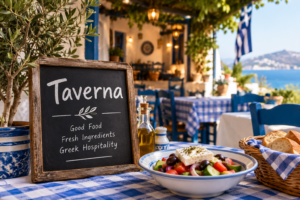
Sit down at any Greek taverna and you will notice the same thing before the food even arrives: a bottle of golden olive oil on the table. It gets poured over salads, drizzled on dips, stirred into stews and brushed onto bread. For Greek cooks, this is not seasoning on the side. It is the base that almost every dish is built on. Here is why.
A Tradition Older Than the Recipes Themselves
Olive oil has been part of Greek life for around four thousand years, dating back to Minoan Crete. The ancient Greeks believed the olive tree was a gift from the goddess Athena, and Homer described the oil pressed from its fruit as “liquid gold.” That reverence never faded. Today, roughly a quarter of Cretan land is still planted with olive groves, and many families continue to press oil from trees handed down across generations. When a Greek restaurant reaches for olive oil, it is drawing on a custom that predates the modern kitchen by millennia. You can read more about how these traditions shape the menu on our about page.
It Shapes How Greek Food Is Actually Cooked
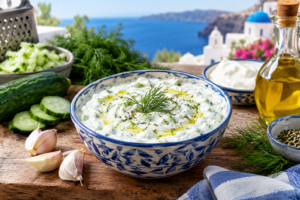
Olive oil is not just poured on at the end. It is a cooking method in its own right. Vegetable dishes known as ladera, meaning “oiled,” such as braised green beans or stuffed peppers, are simmered slowly in generous amounts of oil until it becomes part of the sauce. Grilled meats are marinated in olive oil, lemon and herbs so the oil carries the flavour into the meat while keeping it moist over the flame. Dips like tzatziki and melitzanosalata rely on it for body and richness, and savoury pastries often use it instead of butter for a lighter, crisper bite. Even a simple Greek salad depends on a generous pour to bring the tomatoes, cucumber, olives and feta together.
Why Chefs Choose It Over Other Fats
Extra virgin olive oil holds its character at typical cooking temperatures far better than many refined oils, and it pairs naturally with the herbs, garlic and citrus that define Greek cooking. A peppery, robust oil suits grilled lamb or paidakia, while a milder variety works better for baking or finishing a delicate meze spread. Chefs also choose it because it behaves consistently, so a recipe passed down through a family for decades still tastes the same today.
The Health Story Behind the Flavour
Greece sits at the heart of the Mediterranean diet, one of the most studied eating patterns in the world for supporting long term health. Olive oil is rich in monounsaturated fats and polyphenols, compounds linked to lower inflammation and better heart health. This is one reason Greece consistently reports some of the lowest rates of heart disease in Europe, and why so many nutritionists point to olive oil as a genuine everyday medicine rather than just a cooking fat. That is part of why Greek food has a reputation for being both indulgent and genuinely good for you, something we explored in more depth in our post on whether Greek food is healthy for the heart. It is also a big part of why so many people now look to Greek food for weight loss goals without ever feeling like they are on a diet.
What It Means When You Order From a Greek Restaurant
When a restaurant is genuinely committed to Greek cooking, the olive oil is not an afterthought. At Crete Island, we use extra virgin olive oil from small Cretan farms across our menu, from the tzatziki and melitzanosalata to slow cooked dishes like moussaka and kleftiko. It is one of the simplest ways to tell whether a dish has been made with care or simply assembled. Explore the full range on our menu, or if you want to taste the difference for yourself, book a table and let our kitchen show you what real Cretan olive oil brings to a plate.